|
Type hockeydoel |
Geschikt voor |
Belangrijkste kenmerken |
Wanneer kiezen? |
|
Wedstrijddoelen |
Competitievelden |
Officiële afmetingen, zwaar gevoerd, extreem stabiel |
Bij intensief wedstrijdgebruik |
|
Zaalhockeydoelen |
Sporthallen |
Lichtgewicht, inklapbaar, vloerbeschermend |
Voor indoor en multifunctionele hallen |
|
Trainingsdoelen |
Trainingsvelden |
Portable en flexibel inzetbaar |
Wanneer trainingsvormen regelmatig wisselen |
|
Jeugd/mini doelen |
Jeugdteams en trainingen |
Kleinere afmetingen en lichter uitgevoerd |
Bij focus op ontwikkeling van jonge spelers |
|
Omkiep hockeydoelen |
Techniektrainingen |
Compact en multifunctioneel |
Voor dynamische oefenvormen |

Written by Danique Leuverink | Published on February 12, 2026
High-quality hockey goals are essential for a safe, durable, and professionally equipped hockey facility. They influence the quality of play and represent an investment that will determine the use of the field for years to come.
Whether it's new construction, renovation, or optimizing training facilities, investing in the right hockey goals means investing in continuity and reliability.
Why high-quality hockey goals make the difference
Hockey goals are daily exposed to high ball speeds, intensive use, and varying weather conditions. A goal must be able to effortlessly withstand this strain without compromising on stability or safety.
High-quality hockey goals ensure:
- A safe sporting environment for players and coaches
- A professional appearance of the hockey field
- Less maintenance and lower replacement costs
- Reliable long-term use
Cheaper alternatives may seem attractive in the short term, but in practice often lead to higher costs due to faster wear and tear, repairs, or replacement. For facilities that think ahead, quality is therefore not a luxury, but a strategic choice.
What types of hockey goals are there?
The right choice begins with an understanding of the different types of hockey goals and their applications. Each type places different demands on construction, portability, and ease of use.
Match hockey goals: maximum stability for top-level play
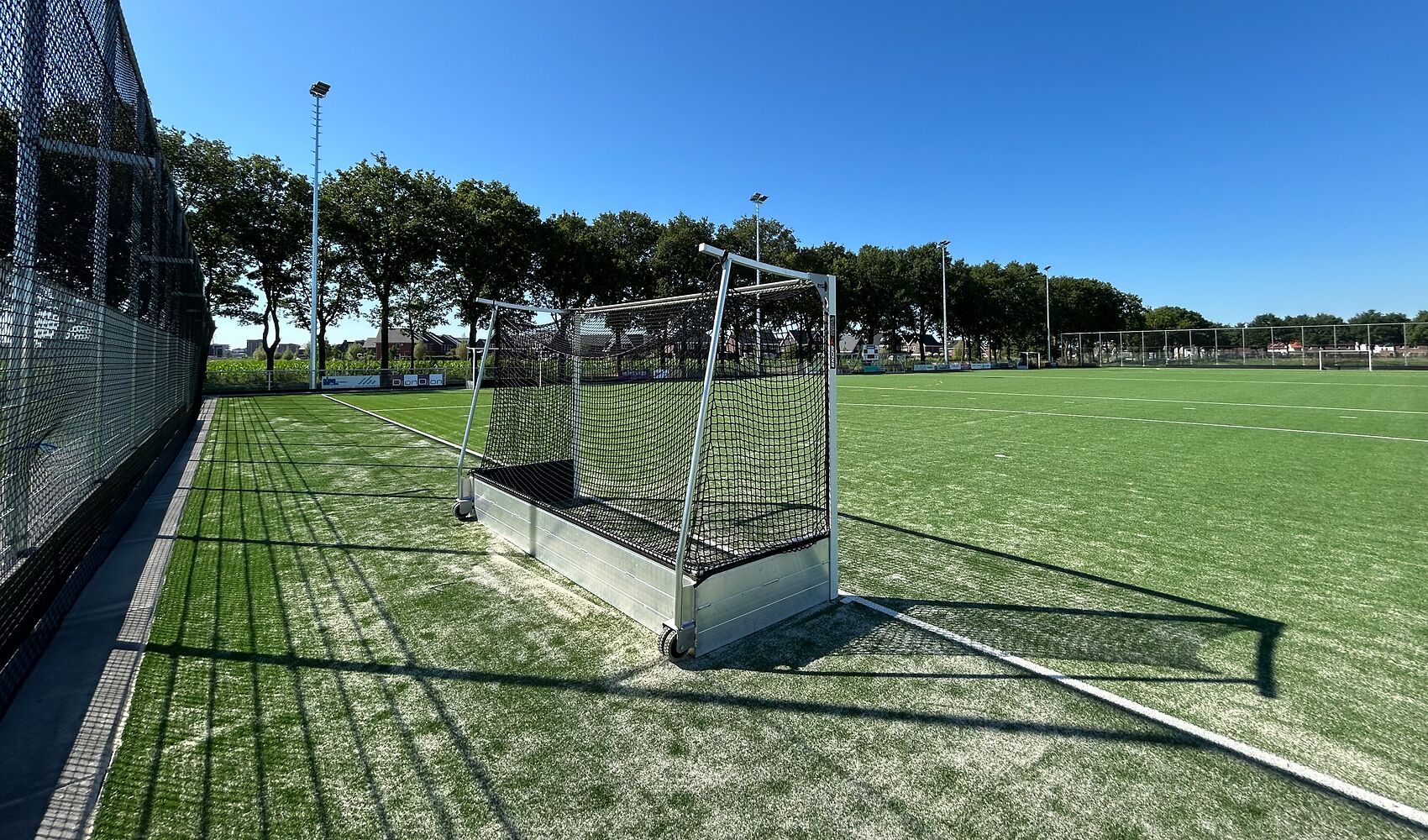
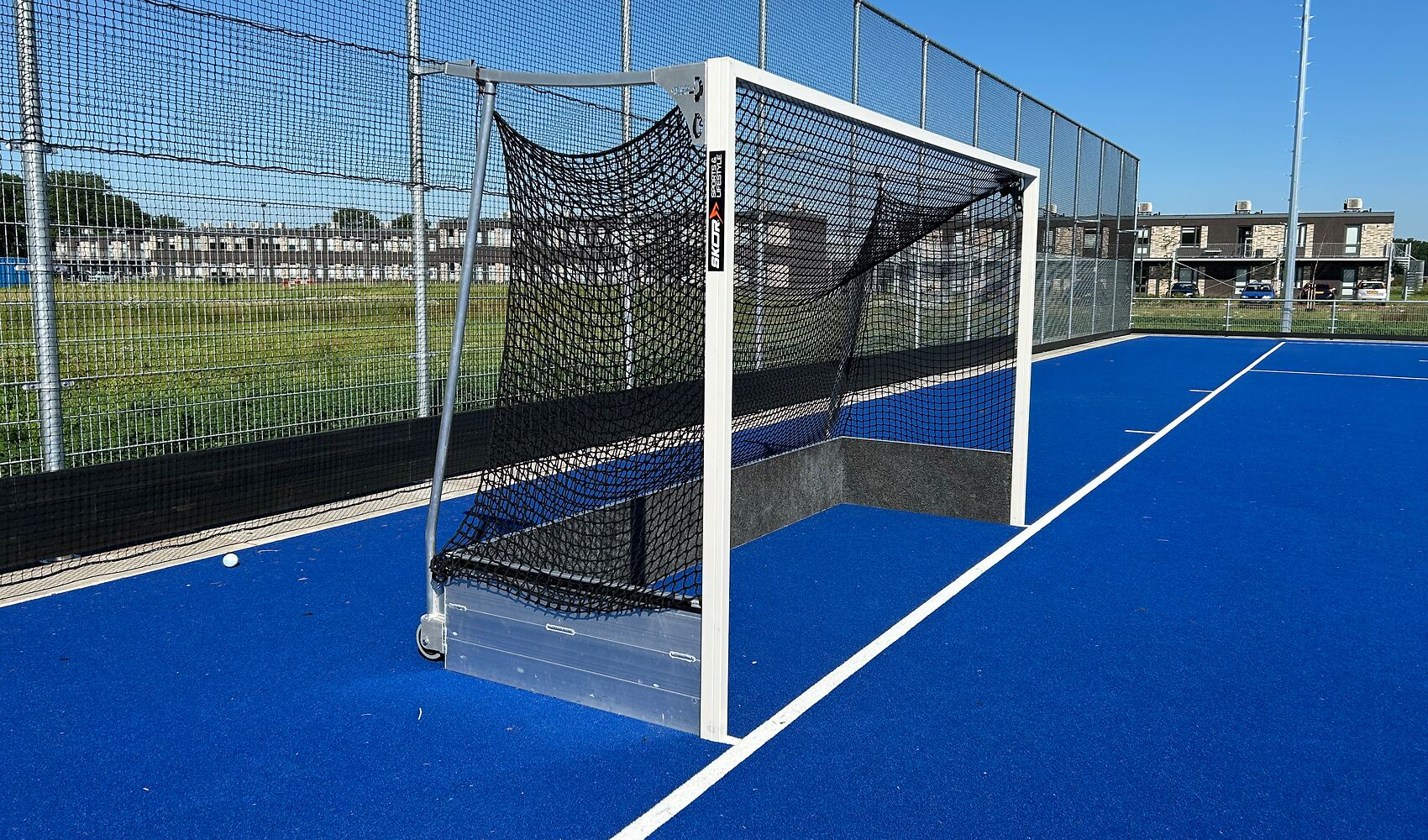
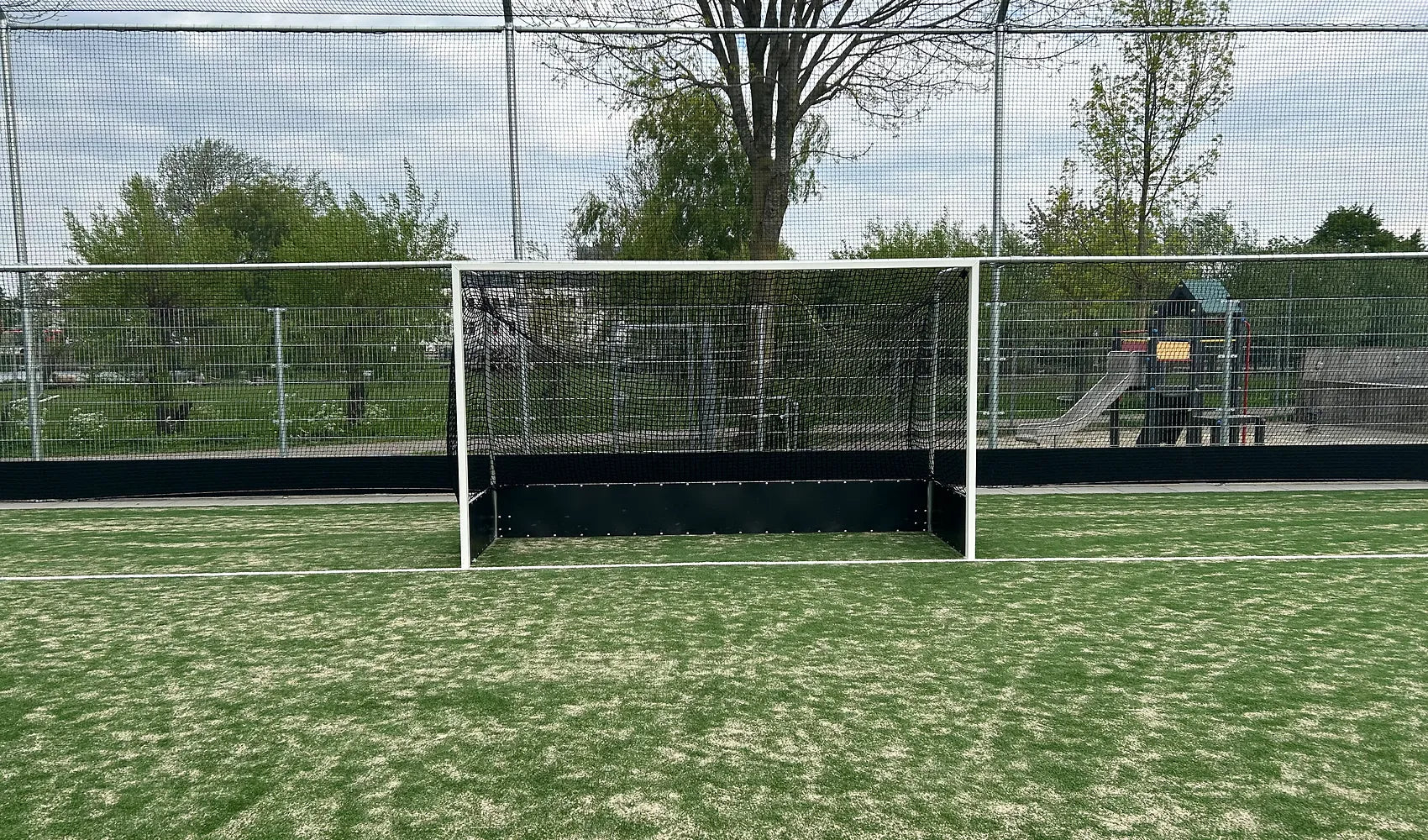
On competition fields, dimensional stability and durability are absolute prerequisites. Match hockey goals must be able to withstand powerful ball impacts and intensive use throughout the season.
Professional facilities therefore often opt for senior goals with a heavy-duty construction and high-quality finish. Variants with integrated transport wheels combine stability with practical portability, for example, during field maintenance or reorganization.




Indoor Hockey Goals for Intensive Use
Indoor hockey places specific demands on materials and finish. Protecting the sports floor and minimizing injury risks are paramount.
Indoor hockey goals are typically lightweight, feature rounded shapes, and are designed for safe use in sports halls. Foldable models also allow for multi-functional use of halls without compromising on quality.
Want to know more than just which indoor hockey goals are suitable? Check out our blog with the indoor hockey checklist.
Training Goals: Flexibility on the Field
An effective training field requires adaptability. By placing multiple goals, coaches can organize various training exercises simultaneously and optimally utilize the available space.
Movable or multi-functional training goals offer this flexibility. Think of flip-over goals for technical training or models that can be compactly stored when storage space is limited. For clubs with growing membership, training goals are therefore a logical investment.

Youth and mini hockey goals: the foundation for talent development
Youth hockey requires goals that match the playing level and physical development of young players. Adapted dimensions increase playing enjoyment and support technical growth.
By choosing youth and mini hockey goals, you create a safe learning environment that grows with the club and contributes to a strong progression to higher teams.
What to consider when choosing hockey goals
A thoughtful investment begins with the right questions:
- How intensively will the field be used?
- Which target groups will use it?
- Is portability necessary?
- Do the goals need to be stored quickly?
In addition, quality, material choice, and stability play an important role. Goals with a robust frame and durable finish retain their shape, even under prolonged stress. This contributes to a safe sporting environment.
Overview: which hockey goal suits your accommodation?
The value of premium hockey goals
For hockey clubs, an investment is not just about purchase costs, but about performance over the entire lifespan. The EHL hockey goals offer lower maintenance costs and a professional appearance for the facility. This creates a sporting environment that functions today and is ready for the intensity of tomorrow.
The foundation for a future-proof hockey facility
The right hockey goals influence more than just the game. They contribute to safety, efficient management, and the professional appearance of the entire complex.
By aligning goals with usage, target group, and intensity, you lay a solid foundation for years of reliable use, without unexpected investments later on.
Professional advice on hockey goals for your facility
The choice of the right hockey goal directly impacts facility management. A well-founded selection prevents costly adjustments and ensures a sporting environment that is ready for the future.
Do you want certainty in making the right choice? Our specialists are happy to advise you on the optimal design of your hockey facility. Send an email to info@skor.nl or call +31 88 008 1100.
Frequently asked questions
We have listed the frequently asked questions about hockey goals for you here.
What are EHL field hockey goals?
Euro Hockey League (EHL) hockey goals are high-quality competition goals used at the highest level of hockey. They are designed for high ball speeds and often feature a free-hanging net, ensuring optimal stability, safety, and durability.
Are portable goals as stable as fixed goals?
Yes. Portable field hockey goals are just as stable as fixed goals, provided they have a solid construction and sufficient weighting.
Which hockey goals are suitable for multi-sport pitches?
Portable or foldable hockey goals are most suitable for multi-purpose sports fields. They allow one field to be used for training sessions, matches, and other sports activities.
What should I consider when choosing hockey goals for a school or municipality?
Age and skill level of users, safety, flexibility, durability, and maintenance are important considerations when choosing hockey goals for a school or municipality.
Which field hockey goals are most suitable for training sessions?
Mini hockey goals, flip-over goals, and portable goals are often used for training sessions. These goals offer flexibility in exercise forms and are easy to move, making them widely applicable in training environments.
What are the dimensions of an official field hockey goal?
An official senior field hockey goal measures 3.66 meters wide and 2.14 meters high. These dimensions are used on match fields and are designed for intensive use and high ball speeds.